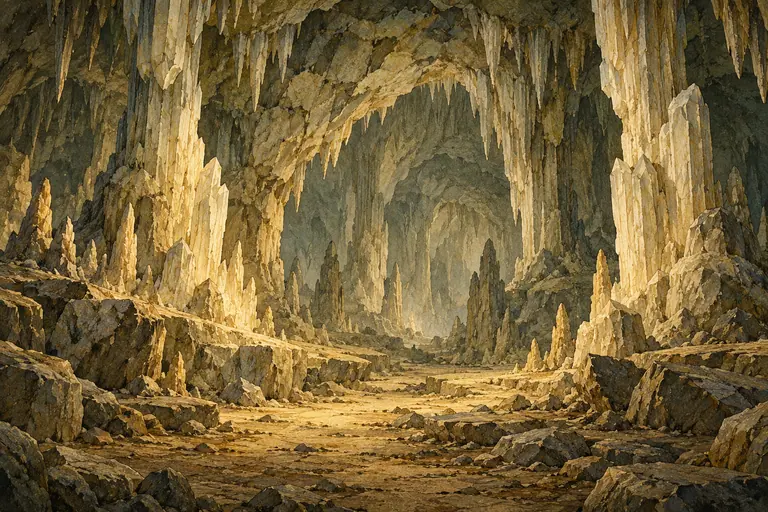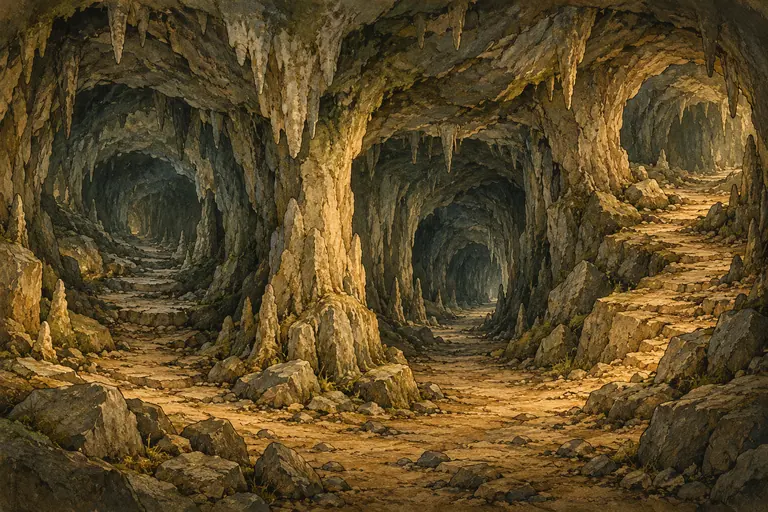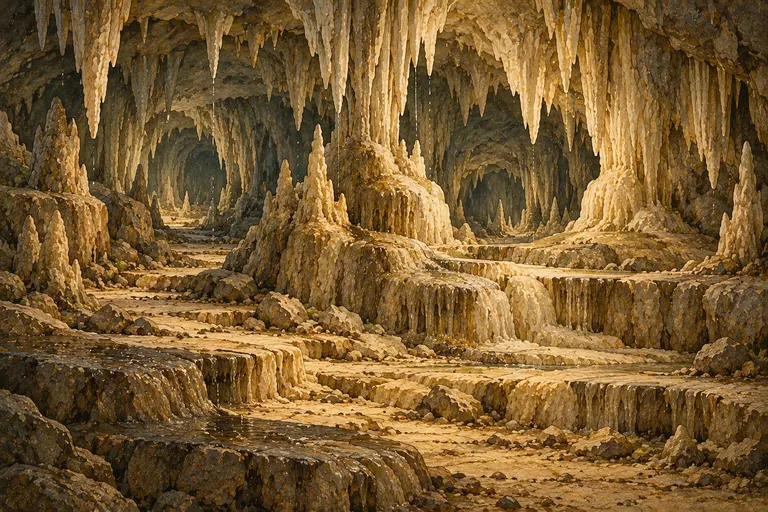
Cave Variants
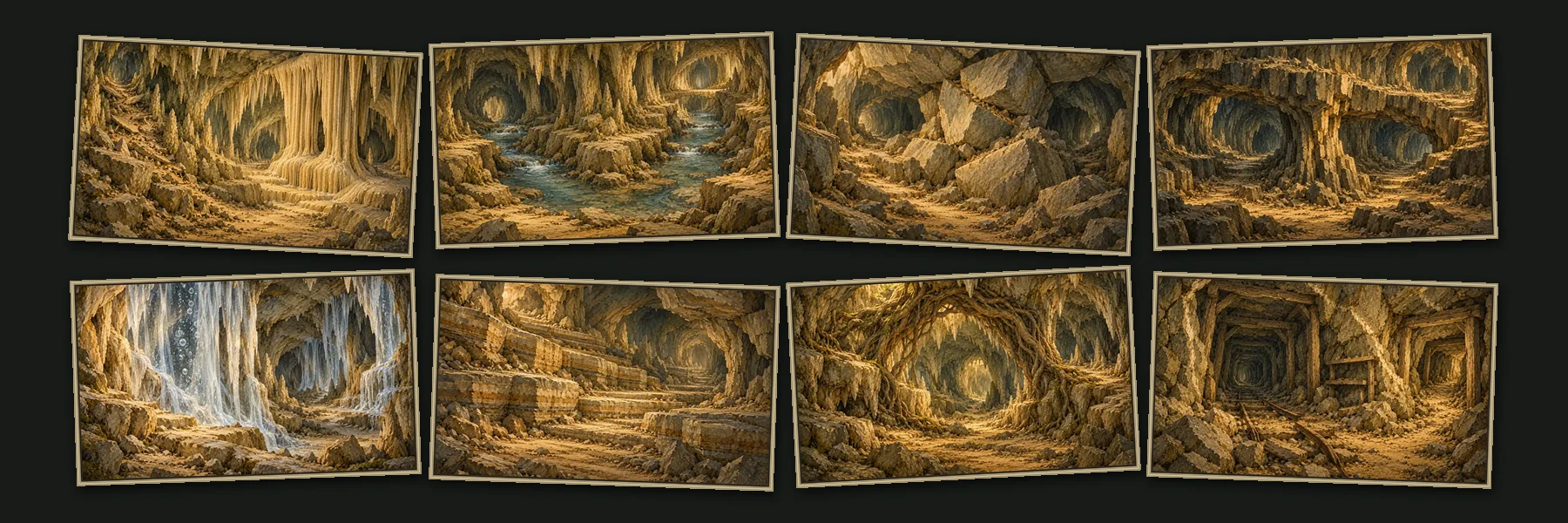
Every cave entrance belongs to one of 8 variants. The variant sets the rock, the look and showpiece chambers, the possible run conditions and the investigation story you piece together. This page lists them all. How caves work in general (light, actions, hazards, mining) is on Caves.
Spoiler note: the "Investigation" rows give away each cave's clue chain.
How the Story Works
- Clues: each variant has an investigation of 3 clues. You find them by using Observe in evidence chambers.
- Keeping progress: clues you verify are kept across visits.
- Leads: the cave's leads tell you which clue is next and where to read it, once you've found that chamber.
- Finishing: when all 3 clues are recorded, the conclusion is written to your records.
- The final chamber: reaching and completing it reveals the cave's landmark, which you can name.
- Run condition: each visit rolls one of the variant's 3 conditions, never the same one twice in a row. The condition changes how the cave behaves on that visit.
The Variants
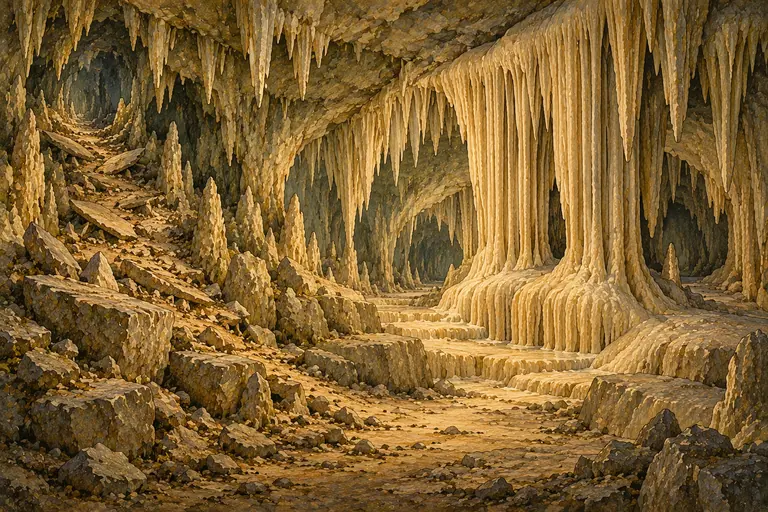
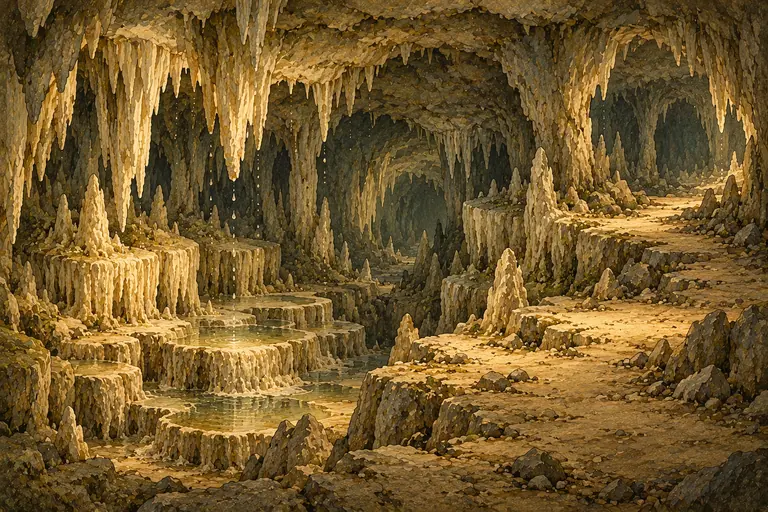
Dripstone Caverns
- Appears: anywhere · Rock: limestone
- Signs: slow dripping, pale flowstone and sheltered dry shelves.
- Run conditions: dry shelves · new seepage · slow dripping
- Signature chambers: Flowstone Stair, Curtain Gallery
- Final chamber: Cathedral of Stone
- Investigation: read the old waterline → connect the buried survey marker → compare overlapping calcite deposits.
Underground River Caves
- Appears: near rivers, lakes, shores and swamps · Rock: limestone
- Signs: water-worn stone, polished banks and old flood marks.
- Run conditions: low flow · rising flow · divided current
- Signature chambers: Split Channel, High Shelf Refuge
- Final chamber: Hidden River Hall
- Investigation: read successive flood marks → compare the abandoned high-bank shelter → connect bearings along the changed river course.
Fractured Granite Caves
- Appears: mountains and rocky highlands · Rock: granite
- Signs: angular joints, abrasive blocks and long quartz-bearing fractures.
- Run conditions: settled blocks · warning grit · clear joints
- Signature chambers: Blockfall Chamber, Sound Anchor Bay
- Final chamber: Great Fracture
- Investigation: read the first scratched bearing → follow successive joint-plane marks → connect the mountain fracture stations.
Ancient Lava Tubes
- Appears: rare volcanic pockets in the mountains · Rock: basalt
- Signs: cooled rope-like floors, basalt ribs and collapsed skylights.
- Run conditions: clear skylights · dusty bands · upper draught
- Signature chambers: Twin Tube Junction, Basalt Rib
- Final chamber: Last Skylight
- Investigation: read the traveller marker → correlate continuous cooling bands → connect the route before and after the skylight collapse.
Icebound Caves
- Appears: cold, snowy or icy ground · Rock: limestone
- Signs: a cold draught, translucent ice and stable rock-floor ledges.
- Run conditions: clear ice · refreezing drips · exposed layers
- Signature chambers: Ice Curtain, Rock-Side Ledge
- Final chamber: Blue Vault
- Investigation: read the frost and incoming-air boundary → compare the exposed expedition debris layers → map the cold-air circuit around the sealed passage.
Fossil-Bearing Caverns
- Appears: limestone and sedimentary ground · Rock: sedimentary
- Signs: layered sedimentary walls and fragile shell impressions.
- Run conditions: clean bedding · silty shelves · new exposure
- Signature chambers: Bedding Stair, Fallen Plate Chamber
- Final chamber: Ancient Reef Wall
- Investigation: record the shell-bed orientation → match the separated impression → connect bedding across the ancient reef wall.
Root and Fungal Hollows
- Appears: forests · Rock: limestone
- Signs: shallow root-bound arches, organic debris and damp rock.
- Run conditions: surface wash · quiet burrows · root dripping
- Signature chambers: Root Arch, Burrow Junction
- Final chamber: Rootfall Chamber
- Investigation: trace the surface-water staining → compare the shallow fungal and root-growth context → connect the surface wash to the deeper water route.
Abandoned Mine Workings
- Appears: anywhere · Rock: granite
- Signs: timber spoil, hand-cut faces and abandoned survey marks.
- Run conditions: dry workings · strained timber · open crosscut
- Signature chambers: Timbered Junction, Broken Haulage Cut
- Final chamber: Last Working
- Investigation: compare the repair notes → connect the survey ledger bearings → read working marks at the abandoned face.
Which Variant You Get
- Everywhere: Dripstone Caverns and Abandoned Mine Workings can appear anywhere.
- Fossil caverns: possible wherever the ground is limestone or sedimentary.
- Terrain variants: the rest need the right surroundings (water, mountains, forest, cold), and lava tubes only appear in rare volcanic patches of the mountains.
- Fixed per entrance: each entrance's variant never changes.
Subterranean Formations & Geological Variants
Caves provide absolute temperature stabilization during blizzard conditions, but carry hazards of rockfalls, darkness disorientation, and apex predators.