Tracking
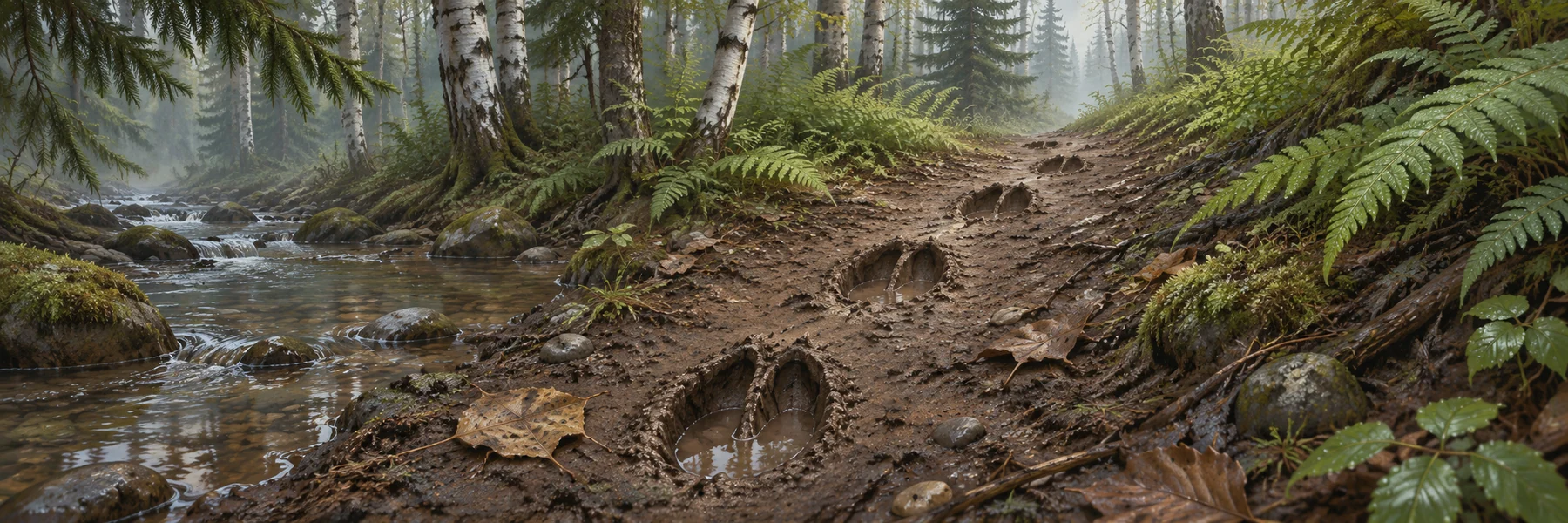
Animals leave real tracks on the map. Reading them tells you what passed, how long ago and which way it went. Following a fresh lead sets up a much better hunt.
Tracks in the world
- Making tracks: living animals leave tracks at most every 4 hours, up to 12 per tile.
- How long they last: about 24 hours.
- Rain shortens their life to 30–70%.
- Cold keeps them ×1.5 longer.
- Spotting tracks:
- surveying can also reveal fresh tracks on nearby tiles;
- specializations improve the chance;
- a dog or cat companion animal adds tracking bonuses.
Reading tracks
The Track action opens a survey minigame where you identify each track:
| Clue | Options |
|---|---|
| Print type | Hoof, paw, bird, low trace… |
| Age | Fresh, aging, old |
| Direction | Where the animal went |
Good readings go into your tracking notebook as fresh leads.
Following a lead
You follow a lead step by step:
- Forks: the trail splits, and you pick the branch that matches the tracks.
- Gaps: water, rock or rain break the trail, and you must pick it up again.
- Disturbance: fast routes and walking upwind raise the animal's awareness. A sheltered, downwind approach lowers it.
- Unaware animal: you start the hunt closer and the animal is calmer.
- Highly aware animal: it bolts.
Tracking skill elsewhere
- Bandit camps: tracking above 75 reveals every camp entrance; 85+ also shows patrol routes. See Bandit Camps.
- Cache traps: helps you notice traps on expedition caches.
- XP: tracking XP also comes from surveying, searching and reading ruins lore.