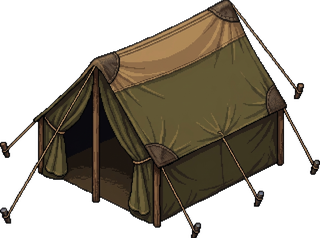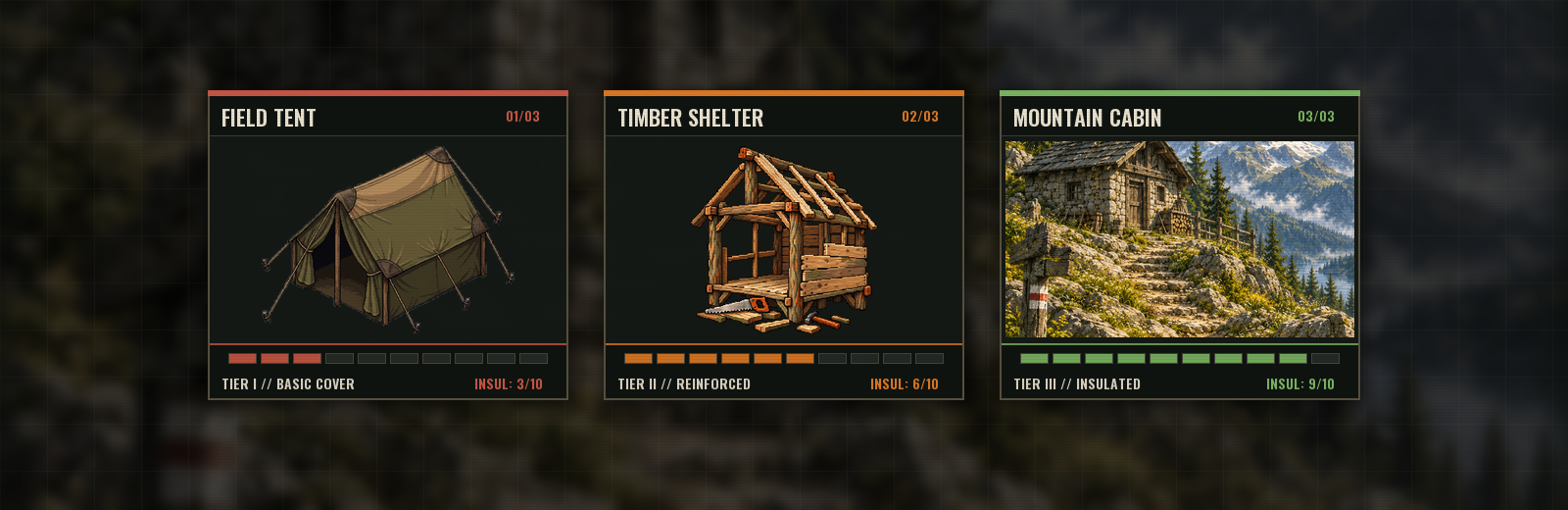
Shelter Quality Guide
Shelter quality decides how safe and efficient your rest cycle is, especially in cold or unstable weather.
Why Shelter Quality Matters
Better shelter quality improves:
- warmth retention,
- overnight survival stability,
- recovery consistency between expeditions.
Low-quality shelter can turn small weather problems into full survival crises.
When to Upgrade Shelter
Prioritize upgrades when:
- nights are becoming dangerous,
- you are running longer routes,
- your recovery windows feel weak.
Practical Shelter Routine
- build a workable shelter early, then improve it in stages,
- pair shelter use with food/water recovery planning,
- avoid sleeping in exposed areas when you have alternatives.
Positioning and Use
Shelter benefits are strongest when you are actually using the shelter location, not just passing nearby.
Make shelter placement part of route planning so your fallback point is always useful.
Common Mistakes
- delaying shelter upgrades too long,
- assuming any shelter is good enough for severe weather,
- treating shelter as optional during long-distance runs.