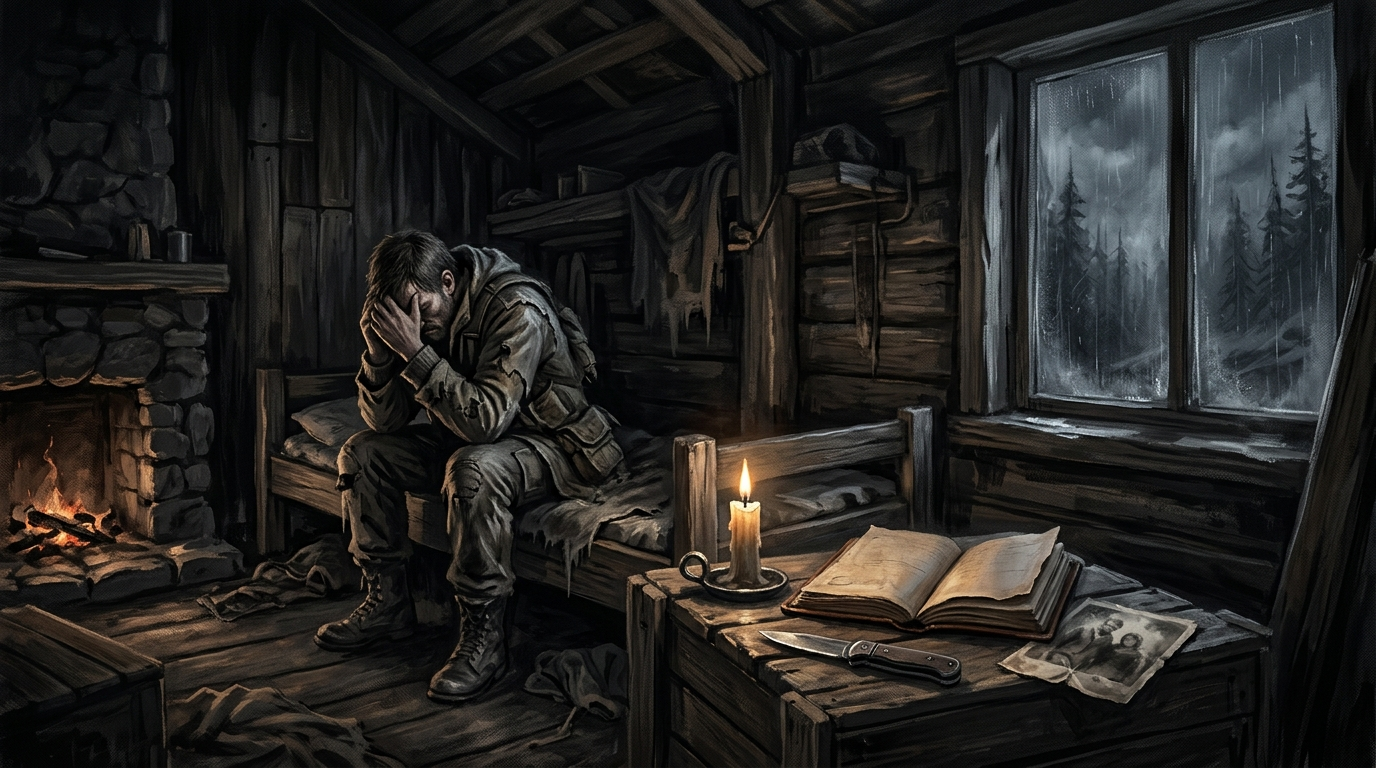
Mental Health, Morale and Trauma
Besides your body, three numbers track your state of mind:
- Morale: your day-to-day mood.
- Mental health: your long-term psychological wellbeing, 0–100.
- Trauma: the weight of injuries and hard experiences.
See also Survival, Health & Wellbeing and Sleep Debt.
How mental health changes
Every hour mental health slowly drops:| Condition | Drop per hour |
|---|---|
| Base | −0.05 |
| Trauma above 40 | −0.20 more |
| Morale below 30 | −0.10 more |
What restores mental health
| Source | Mental health |
|---|---|
| Sleeping | +8 |
| Resting | +5 (also +3 morale, and eases trauma) |
| Reading an old book | +12 |
| Eating canned food | +6 per portion |
| Eating cooked food | +2.5 per portion |
Trauma
- Gaining trauma: every injury adds trauma (+0.65 × the injury's severity).
- Easing trauma: resting eases it, and a finished house or rented room improves trauma recovery. Healer treatment in settlements, medicine and medkits also ease it.
- Effect: above 40, trauma speeds up mental-health loss.
Morale
Morale rises with:- good food and water;
- rest;
- discoveries, completed caves and camps;
- achievements;
- helping survivors;
- companions;
- a comfortable house.
- injuries and illness;
- hunger and cold;
- fleeing fights;
- paying bandit tolls;
- abandoning people in need;
- low mental health.
- Below 30: while travelling there's a 22% chance to veer off course (see Movement).
- Combat: low morale also lowers your combat readiness.
Sleep and the mind
- Sleep deprivation brings sleep-debt warnings, then hallucinations, and finally collapse.
- Microsleeps: at very low energy you can lose 1–3 hours to a microsleep during an action.
See Sleep Debt.
Tips
- Rest regularly, even when you're not tired. It's the steadiest mental-health source.
- Treat injuries early to keep trauma below 40.
- Keep a few canned meals and old books for bad stretches.